Overview
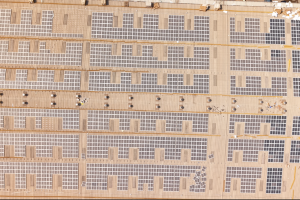
The 700 kWp Flexible Solar Project at Reliance represents a transformative solution in solar energy deployment, addressing the specific structural challenges of rooftops with limited load-bearing capacity. Implemented using ultra-lightweight Flexible modules, this project sets a benchmark for architectural adaptability, aesthetic integration, and sustainable innovation in renewable energy.
Project Stats
- Installed Capacity: 700 kWp
- Location – Bhiwandi, Maharashtra.
- Modules Used: 2,593 Flexible Modules, each with a capacity of 270 Wp
- Estimated Yearly Generation: 9.2 Lac Units of Electricity
- Yearly Cost Saving: ₹92 lac (assuming per unit cost as ₹10)
Design and Installation Challenges
One of the principal challenges of this installation was aligning technical functionality with visual appeal. The rooftop’s non-flat, curved structure required unique handling:
- Maintaining a uniform look and clean alignment on a non-conventional surface.
- Lack of standard mounting structures necessitated tailored layout design.
- Ensuring robust adhesion and safety of modules against environmental stressors like wind, temperature shifts, and uplift forces.
Solutions
To effectively address these complex challenges, the project team implemented a series of innovative and meticulous strategies:
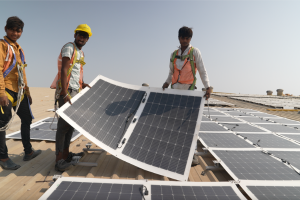
- Layout Precision: Conducted multiple layout trials and involved experienced technicians to ensure exact alignment on the curved roof.
- Custom Tools: Designed and used a custom template and spacing jig to maintain uniform gaps and symmetrical alignment throughout the installation.
- Adhesive Performance: Selected high-performance, weather-resistant adhesives after extensive on-site testing to ensure strong and lasting bonding.
- Technical Compliance: Strictly followed Original Equipment Manufacturer (OEM) guidelines for adhesive curing and load safety to guarantee durability and safety.
Customer Problem and Our Solution
The customer’s primary concern was the inability of their rooftop to support conventional solar infrastructure due to limited load-bearing capacity.
Our lightweight flexible PV solution addressed this by:
- Imposing only ~10 kg/m² load, making it ideal for structurally sensitive roofs.
- Eliminating the need for mounting structures or roof penetration, thus avoiding leakage risks and structural compromise.
- Ensuring seamless adaptation to the existing roof profile without requiring civil modification.
This approach enabled the transformation of a non-viable rooftop into a productive clean energy asset, providing the client with a sustainable and architecturally sympathetic solution.
Unique Features of the Flexible Module System
- Ultra-Lightweight – Weighs ~10 kg/m², ideal for rooftops with structural load limitations.
- Non-Penetrative Mounting – Uses industrial adhesives—no drilling—protects roof integrity and prevents leakage.
- Adapts to Complex Roofs – Flexibility allows installation on curved, domed, or irregular surfaces.
- Aesthetic Design – Sleek, low-profile appearance supports Building-Integrated Photovoltaics (BIPV).
- Glass-Free Durability – Resistant to impact, vibration, and wear—suitable for rugged and mobile applications.
- Low Maintenance – Corrosion-resistant and ideal for coastal or humid environments.
- Retrofit-Friendly – Enables solar on structurally weak roofs without reinforcement or civil modifications.
Conclusion
This project exemplifies how advanced solar technologies—like flexible modules—can open new possibilities for clean energy deployment in challenging environments. Through careful design, customized installation strategies, and adherence to best practices, the team successfully turned constraints into opportunities, delivering a system that is efficient, reliable, and visually integrated into the building architecture.