
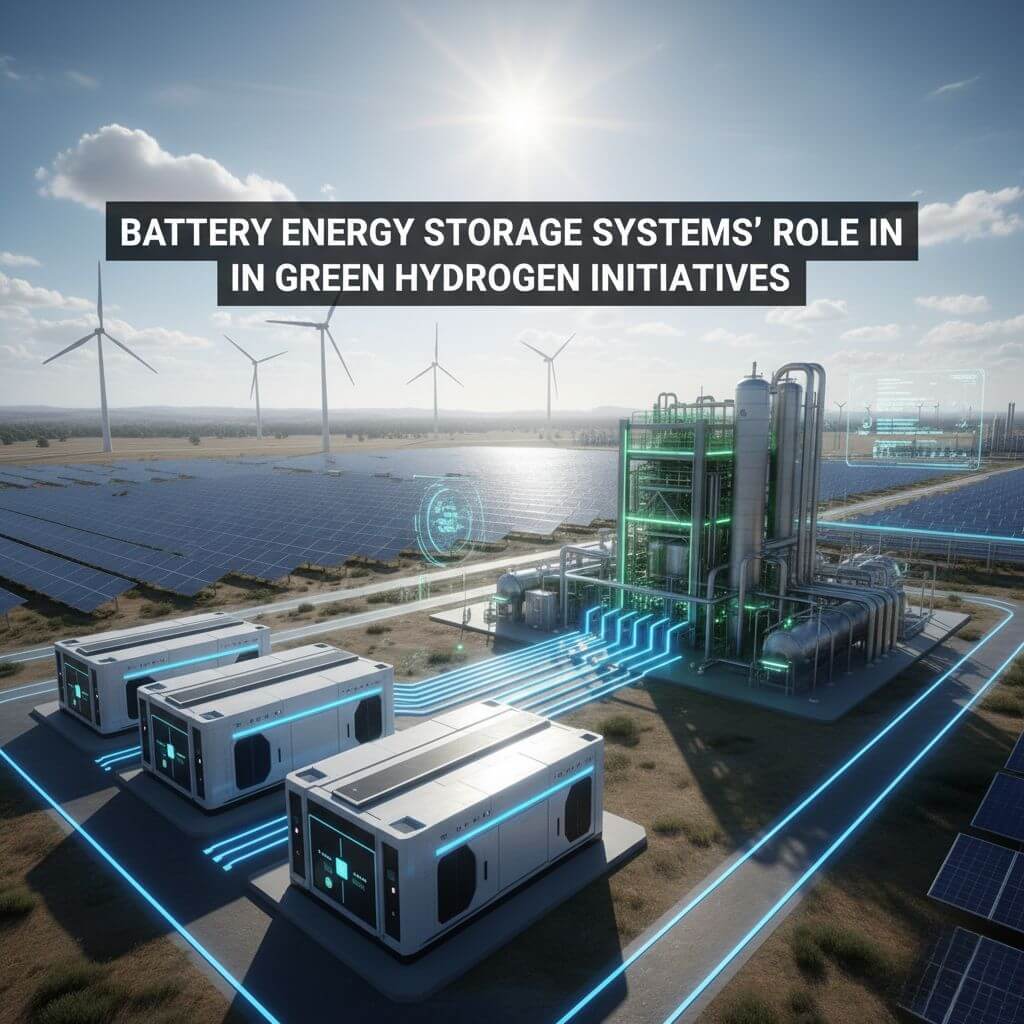
The Role of Battery Energy Storage in Green Hydrogen Projects
The global energy system is evolving, and green hydrogen energy has a potential role in a sustainable energy future. There are challenges with renewable energy sources and the intermittency when producing energy from renewable resources. Solar and wind generators have cloud cover and variability, which detract from the benefits of renewable energy when a hydrogen energy system is dependent on a supply of energy from renewables. This is where there are opportunities with battery energy storage systems in India working with renewable energy generation systems to create a more consistent, reliable power source for hydrogen production, and the production of green hydrogen has a path to large-scale production and use.
Battery Energy Storage System’s Understanding in Green Hydrogen Projects
Battery energy storage systems in India will be deployed more to balance power demands and to facilitate shifts in energy use for hydrogen projects. These systems can store excess electricity produced from renewable energy sources and then use it later for energy consumption at the site to allow for hydrogen electrolyzers to run when there is little energy being shipped from renewable production sites. In this way, less energy is wasted, there is better reliability of the system, and ultimately, green hydrogen energy production could be done effectively and extraordinarily as demand increases.
Battery Energy Storage Systems: How Do They Work?
So, how do battery energy storage systems work in the context of green hydrogen? Battery energy storage systems essentially store electrical energy in chemical form to convert back to electrical energy immediately when there is a demand. Lithium-ion batteries, flow batteries, and solid-state batteries are the most often used. Stored electricity can power electrolyzers located within a green hydrogen project to produce green hydrogen or, more broadly, it can be fed into the grid during peak demand. Essentially, stored electricity will balance when green hydrogen is produced, when electrolyzers will continuously operate, and when the renewables might otherwise be limited. Stored electricity will help make green hydrogen more cost-effective and will also help ensure reliable energy.
Benefits of BESS-Green Hydrogen Projects
There are multiple benefits to battery energy storage systems in India as they work with green hydrogen projects:
- Grid Flexibility: BESS smoothes the fluctuations that might be present while harnessing the renewables, thus ensuring constant operation of the electrolyzers.
- Efficiency: BESS takes advantage of excess renewable energy, which reduces curtailment of viable energy.
- Increasing Flexibility: BESS surely assists in our ability to create green hydrogen energy even when solar or wind is less productive.
- Scalability: BESS encourages large-scale production of green hydrogen energy, which can be used for industrial purposes and eventually, transportation.
If developers marry storage technology with hydrogen technology, they will be ensuring increased output and reduced operation costs, and the acceleration of India’s green energy transition.
Conclusion
As the necessity for green hydrogen energy systems increases, the importance of battery energy storage systems in India through capital improvement, production scale through costing changes, and local policy support for hybrid energy systems, the more we will see green hydrogen projects with batteries as improvements on reducing institutional fossil fuel dependencies and a solution to building a cleaner, resilient power grid.
FAQs
1. What are green hydrogen projects?
Green hydrogen projects are producing hydrogen using renewable, wind, solar, or hydro energy sources to produce hydrogen, but doing so and not emitting greenhouse gases.
2. How does a battery energy storage system work?
All battery energy storage systems in India take advantage of excess electricity from generation sources like renewables and store the electricity for use later on and/or provide stability to the grid for a consistent power supply.
3. Why is it important to use BESS for green hydrogen energy?
Battery energy storage systems in India allow for the reliable viability of hydrogen producing electrolyzers by using excess energy, for more output, for cheaper, for more energy stability, and more efficiency.
4. What types of batteries are energy storage systems?
All types of batteries can work such as lithium-ion, flow, solid-state, etc., and each type of battery has unique competitive advantages for efficiencies, costs, prescriptions, life span of use.
5. What does a green hydrogen project do to help India’s energy set up?
Green hydrogen projects should help limit fossil fuel dependency and achieve decarbonization of the industry while pushing society towards renewables and lowering the reliance on fossil fuel.