Solar Mounting Systems Explained: Types & Benefits
Rooftop solar installation is not just about picking any random solar panel and installing it; it’s about choosing the right one that matches the needs. Not only that, but the chosen system must also be safe, efficient, and durable, lasting for several years to come. Be it a residential rooftop project or a commercial-scale installation, it is important to understand that the different mounting systems are crucial to make the right choice. Waaree RTL is one of India’s leading solar solution providers that consistently places importance on selecting the right solar mounting systems to ensure optimal energy generation.
What Are Solar Mounting Systems?
A solar mounting system is one of the most important aspects of installing solar panels. It is the framework that forms the foundation supporting solar panels, ensuring they are kept safe in their position to capture maximum sunlight, keeping them securely in place, at the right angle, allowing them to capture sunlight at the optimal angle. The right mounting system ensures optimal efficiency and stability, thereby increasing the lifespan of your solar installation.
Types of Solar Mounting Structures
1. Rooftop Solar Mounting Systems
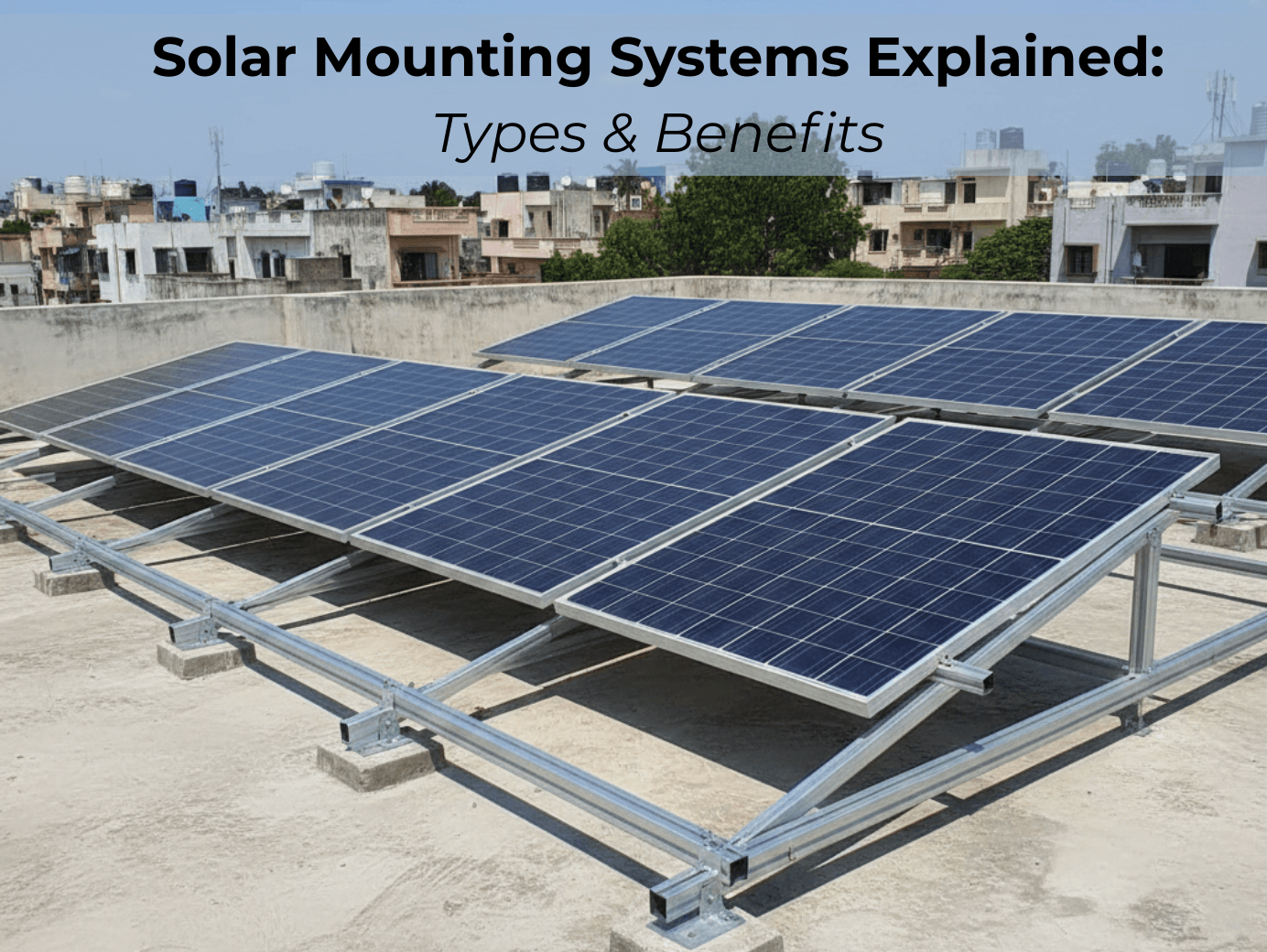
Rooftop solar installations are common, given the limited space and scarcity of available land; these mounting systems are designed to fit any roof, whether flat or sloped. Some of the commonly used rooftop mounting types include:
- Fixed Tilt Mounts: In this type of mounting, panels are installed at a particular angle to maximise sunlight exposure throughout the year
- Adjustable Tilt Mounts: These mounts allow you to manually adjust the angle to match the sun’s direction throughout the year.
- Ballasted Mounts: This mounting type is perfect for flat roofs and requires no drilling. They are placed on weighted bases for stability.
Rooftop systems are easy to install and are an ideal choice for homeowners and small businesses.
2. Ground-Mounted Solar Systems
Ground-mount solar systems are used where there is ample land availability and the solar project is installed. They have the following advantages:
- The panels can be arranged at the desired angle for maximum sunlight exposure.
- It is easy to maintain well, as the panels can be accessed at ground level.
- Being ground-mounted, these systems are scalable as compared to rooftop installations.
Ground-mounted systems are of two types:
- Standard Ground Mounts: This type of structure is anchored on the ground.
- Tracking Systems: In this type of system, the panels are designed to follow the sun’s path, increasing energy production.
Ground-mounted solar panels are commonly used in solar farms and industrial setups where there is large-scale generation.
Why Choose a High-Quality Solar Panel Mounting System?
Investing in a robust solar panel mounting system ensures long-term performance. Key benefits include:
- Durability: High-quality materials like aluminium and galvanized steel resist corrosion and harsh weather conditions.
- Safety: Proper mounting prevents panels from detaching during high winds or storms.
- Optimal Performance: Correctly angled and positioned panels capture maximum sunlight, improving energy output.
Solar mounting structure is of different types, namely rooftop as well as ground mount, which one can choose depending on the size and type of solar panel planned to ensure maximum reliability. With companies like Waaree RTL that guide and provide end-to-end solutions, right from designing and procuring the right solar panel to mounting and installing seamlessly, the journey to clean, sustainable energy is only easy for both residential and commercial users
Frequently Asked Questions
- What is the difference between rooftop and ground mount solar systems?
A rooftop mounting system is applicable for the use of solar energy in buildings and is installed on the roof. The ground-mounted system is apt for use in solar farms or in large-scale projects, and there is adequate land space to install it. - Can solar mounting structures withstand strong winds?
Mounting structures from reputed brands that are made from materials like aluminium and galvanized steel are - How do I choose the right solar mounting system?
Evaluate the energy consumption, the roof type, what capacity of load is needed, and the availability of sunlight across seasons to choose the right solar mounting system. - Are ground-mounted solar panels more efficient than rooftop panels?
Ground-mounted panels are more efficient as they can be placed at an angle to best capture sunrays. They also make use of tracking systems to follow the sun to generate more energy. - How long do solar mounting structures last?
Solar panel mounting systems of superior quality, built from robust materials, can last for up to 20–25 years with regular care and maintenance.