The Power of Floating Solar Panels to Power Electric Grids
Floating Solar Panels for Grids
India is experiencing an increase in the need for electricity due to the growth of the economy and the number of people in need of electricity. The country has a peak deficit of electric power, which means that electric demand is greater than the electricity supplied to the grid. Therefore, developing renewable energy in India is critical in meeting the electric demand for the future. One of the ways to develop renewable energy resources in a creative manner is through the use of floating solar panel farms placed on water.
Floating solar, also known as floatovoltaics, is a novel alternative to traditional ground-mounted solar systems. As India pursues more solar electricity production in India, floating solar farms will play an important role in providing electricity to national electric grids.
Definition of Floating Solar Energy Plants and Floating Photovoltaic Systems
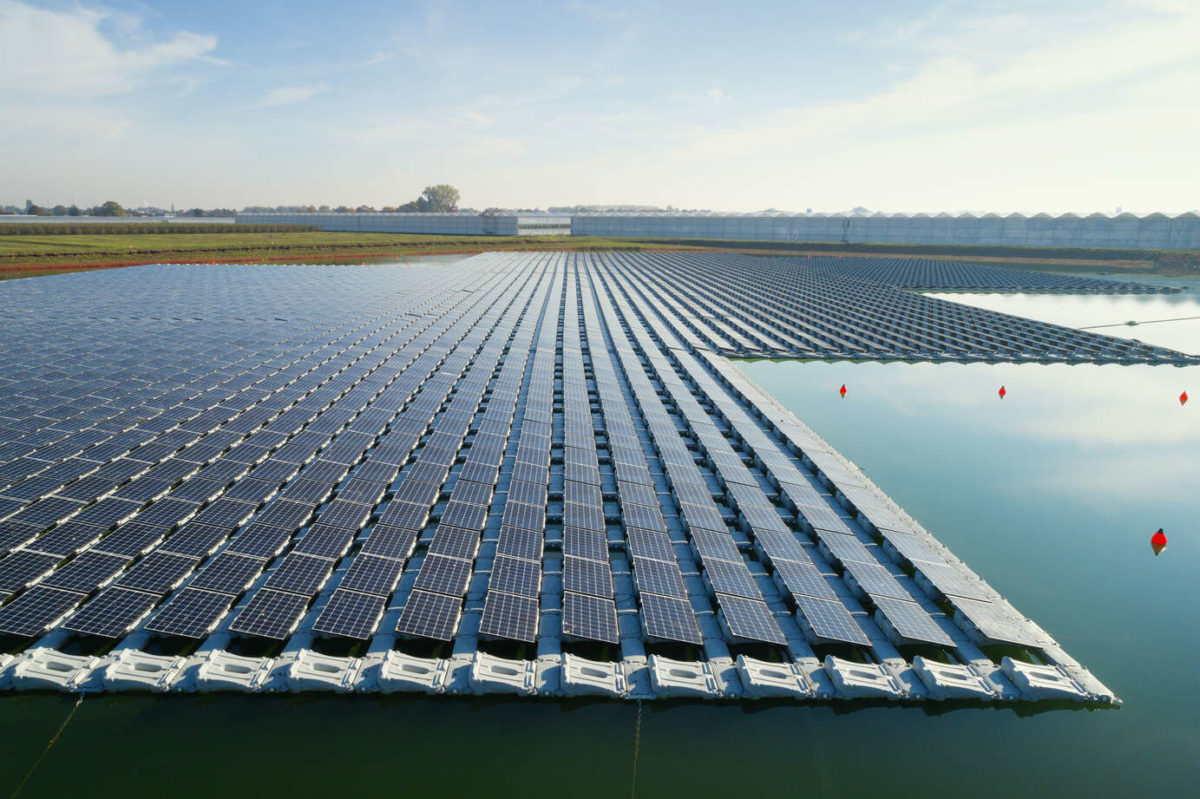
A floating solar power plant is an artificial island on which floating photovoltaic systems are installed and anchored to a body of water, such as a lake, reservoir, or ocean, and sit on the surface of the water with submerged mooring systems anchoring the structure to the submerged bottom of the body of water. The output of the photovoltaic panels is directed to the national electric grid through submerged cables connecting to the electric grid of a grid-connected solar system.
Globally, over the past 10 years, the growth of floating solar has resulted in the practical development of floating solar in India, and there are numerous inland bodies of water in India suitable for installing floating solar installations.
Generally, floating solar energy systems are designed as an electric utility project that produces solar-electric energy and is directly connected to Regional or National Electric Grid Systems. Most floating solar power plants in India operate as interconnected grid-connected solar power plant systems, providing large generation volumes without competing for land.
Floating solar farms are now becoming connected to both regional and National power grids. In providing large generation volumes, they do not compete for land.
5 Reasons Floating Solar Power Plants Make a Great Fit for Large-Scale Grid-Connected Solar Power Generation in India
- Better Energy Generation Due to Cooling: Solar panels operate more efficiently in cooler temperatures than warm ones. By locating solar panels over bodies of water, panels have been shown to deliver an additional 5–10% more energy than if the panels were located on land.
- Preserve Available Land Use: Floating solar farms take advantage of the usable space of water surfaces and preserve land for agriculture, infrastructure, or future development.
- Reduce Water Evaporation: Floating solar arrays shade the surface of water, so less water will evaporate from reservoirs, lakes, etc.
- Minimal Environmental Impact: When floating solar arrays are carefully designed, the installation of floating photovoltaic systems will have a lower environmental impact than traditional solar and wind projects.
- Existing Projects: There are several floating solar projects in India already providing energy to regional electric power grids.
Examples of Major Floating Solar Power Projects in India
Kerala Backwaters: NTPC developed a 100MWp floating solar farm covering 750 acres at Kayamkulam. This facility currently feeds the southern power grid of India.
Maharashtra Reservoirs: The installation of a 70 megawatt floating solar array on the Rihand Dam reservoir demonstrates the potential for large-scale utility-scale solar projects.
West Bengal Pit Lakes: Sikaria’s Mega Solar project is utilizing floating solar panels that are being installed over a repurposed coal refilling lake.
Karnataka Hydro Reservoirs: A planned 300 MW floating solar installation in the Marala Hydro Reservoir highlights how utility-scale solar projects will soon be developed throughout India.
These and other such large-scale installations will place floating solar in India at the forefront of innovation in Utility Scale Solar Generation.
Operational Considerations When Deploying Utility-Scale Floating Solar Power Projects in India
Floating solar power plants provide significant benefits; however, there are also some operational concerns developers must keep in mind, including:
- The complexity of structural anchoring and mooring systems
- The cost of floating solar power plants tends to be higher than that of land-based solar plants
- Corrosion and maintenance issues due to water exposure
- Routine environmental and water-quality monitoring
- Special engineering practices for large-scale floating solar farms
Long-Term Future – Floating Solar Will Lead the Way for Renewable Energy Growth in India
Floating solar is primed to play a significant role in broadening the use of renewable energy in India. The Government of India has committed to achieving 57% or more of National Electricity Capacity from renewable sources by 2030.
Floating solar will supplement land-based systems and accelerate the development of utility-scale solar projects by unlocking previously unused sites such as reservoirs and water bodies. Studies show India has vast floating solar potential on man-made reservoirs, equivalent to approximately 28 GW of capacity, significantly increasing the country’s solar energy capacity in India.
Energy companies are rapidly deploying floating solar power plant installations throughout the country to strengthen grid reliability and expand clean electricity supply.
A Strategic Solar Solution for India
Floating solar farms are an efficient, scalable, and grid-supportive solution for India’s energy future. Floating solar power plants in India can produce large amounts of electricity using existing water resources, making them a strategic option for expanding renewable energy in India without land constraints.
If developed with proper planning and supportive policies, floating solar projects in India can become a major component of the country’s clean energy transition.
Waaree has been in the solar business for over 20 years, providing manufacturing, EPC, and development of grid-connected facilities, supporting large-scale solar projects across India, including new floating solar technologies.
Frequently Asked Questions
1) What is a floating solar power plant?
A floating solar power plant is a photovoltaic installation located on top of a water body, generating electricity for the grid.
2) Why is floating solar increasingly popular in India?
It helps generate clean power without using valuable land resources.
3) Are floating solar farms connected to the electricity grid?
Most floating solar farms are grid-connected and supply regional or national electricity networks.
4) Are floating solar plants more expensive than land-based systems?
They may require a higher initial investment due to specialised structures.
5) What are the primary benefits of floating solar in India?
They provide large-scale clean energy generation while conserving land.
Post a comment
You must be logged in to post a comment.